There is a prolific "weed" in my backyard, and it is Mossy Stonecrop. I've read it occurs in sandy soils with low fertility. It's growing in and around the raised wooden garden beds, especially in the strawberry patch. It can reproduce from creeping stems and stem fragments, as well as by seed. That means if I wanted to weed it out, any small fragment left in the soil could grow into a new plant.
What is a weed? An unwanted plant, a nuisance...perhaps. My experience organic farming and reading gardening books has challenged the common conception of weeds I once held. Such plants can have many benefits.
All weeds tell us something about the soil they are growing in. Plants don't grow by luck, certain conditions foster them. Weeds (and all plants) have different capacities to draw specific nutrients up from various levels of the soil. Many "weeds" are edible. If slashed or pulled they can be used as mulch, and can also form a living mulch around plants.
While I won't allow weeds to strangle out plants I'm intentionally growing for food, I do want to learn from them more this growing season. Perhaps I need to add more organic matter to my soil, since Mossy Stonecrop thrives in soils with low fertility. I don't mind it's presence bordering the outside of the bed, and creeping inbetween the patio stones. I like succulents and it produces a yellow flower in the summer. I did pull a lot of it out of the strawberry patch. I will watch to see how it grows over the season.
Saturday, April 9, 2011
Vermicomposting in a Bucket
This is my third worm bin. When a friend gave me some red worms in a paper bag at the end of the summer, I hastily drilled some holes in a bucket I got from the farm I was working at, shredded some newspaper, dampened it, added the worms and some veggie scraps and suddenly had a new vermicomposter.
I made it for free, and this was ideal. The worms are breaking their bedding and food scraps down and it is filling up with beautiful worm compost I'll add to my garden.
Friday, March 25, 2011
Back in the Backyard Garden: Planning
I have a backyard again. My old backyard where my Dad and I built a raised wooden bed around the perimeter of the concrete patio, and assembled a curving continuous brick wall bed around the perimeter of the yard, against the fence. I used to grow some vegetables and flowers here. Mainly tomatoes, and many perennial flowers, which still remain: lupines, brown eyed susans, columbine, a white bleeding heart, some hosta lilies.
He built a large trellis on the west side of the fence, where he grew morning glories. I plan on growing them there again this year. I also plan on building more trellises for my climbing scarlet runner beans and winter squash on the north end of the yard.
I learned lupines are nitrogen fixers and am glad about their presence in the perimeter beds. Not only are they beautiful but they have another function in the garden by fixing atmospheric nitrogen into the soil and turning it into plant available form via bacterial nodules on the roots.
I am going to experiment with interplanting vegetables and herbs among the beds which have held only flowers up until now. Why not yield the benefits of the nitrogen rich soil the lupines have been creating for years now?
I have been planning my vegetable bed since February. I bought seeds at the Guelph Organic Conference and will be getting a few more varieties at Seedy Sunday. The brands of the organic seeds I have bought are Urban Harvest and The Cottage Gardener.
An initial garden plan (draft). Bed drawn to scale to allow spacing of plants according to their mature size. Square feet = 48.
Jeavons' "How to Grow More Vegetables" informs of useful companion plantings included in my design: strawberries with onions and spinach, kale with beets, carrots with peas, carrots with leeks and chives, basil with peppers and tomatoes
He built a large trellis on the west side of the fence, where he grew morning glories. I plan on growing them there again this year. I also plan on building more trellises for my climbing scarlet runner beans and winter squash on the north end of the yard.
I learned lupines are nitrogen fixers and am glad about their presence in the perimeter beds. Not only are they beautiful but they have another function in the garden by fixing atmospheric nitrogen into the soil and turning it into plant available form via bacterial nodules on the roots.
I am going to experiment with interplanting vegetables and herbs among the beds which have held only flowers up until now. Why not yield the benefits of the nitrogen rich soil the lupines have been creating for years now?
I have been planning my vegetable bed since February. I bought seeds at the Guelph Organic Conference and will be getting a few more varieties at Seedy Sunday. The brands of the organic seeds I have bought are Urban Harvest and The Cottage Gardener.
Jeavons' "How to Grow More Vegetables" informs of useful companion plantings included in my design: strawberries with onions and spinach, kale with beets, carrots with peas, carrots with leeks and chives, basil with peppers and tomatoes
I have many projects I want to do and techniques I want to implement in my backyard garden. Among these are:
- The hugelkultur bed - a raised bed and vertical garden space
- Trellises - to cover the fence in dense foliage of beans
- Polyculture vs. Row culture - a comparison in methods of planting
- Interplanting & Companion planting - to make best use of space, availability of light and soil nutrients and to create symbiotic relationships between plants to enhance growth and health of plants
- Mulching - heavily on all beds, likely using fallen leaves. Retains moisture, reduces weed pressure, provides a great environment for soil organisms to create healthy soil
- Composters - actively using and maintaining the 2 in my yard.
- Flowers - planting more to attract beneficial insects. Cosmos, nasturtium, echinacea, milkweed, sunflowers
- Mapping and identifying all plants in the garden
- Seed saving
Thursday, March 24, 2011
Hugelkultur
I learned about hugelkultur, a german word meaning "mound culture", in Toby Hemenway's book "Gaia's Garden: A Guide to Home-scale Permaculture."
Hugelkultur involves burying dampened logs, branches and twigs underneath layers of compostable materials, leaves, finished compost and topsoil. The resulting mound can be planted directly into.
This method offers several benefits. The wood holds a lot of moisture, accessible to plant roots for long periods of time, thus watering will be required less frequently. The logs, branches and layers of compostable materials offer habitat for soil organisms, and the slow decomposition of the wood will create healthy and fertile soil. It is a version of composting in place (like sheet mulch).
It is important to include nitrogen rich materials in the layers on top of the logs, and shoved inbetween them, since the decomposition of the woody materials will use a lot of nitrogen in the process. A good carbon/nitrogen balance can be maintained by including nitrogen rich kitchen scraps, fresh leaves, etc into the mound's layers. Also planting nitrogen fixing legumes (peas, beans) in the hugelkultur bed will also add nitrogen into the soil.
I decided to try it out in a specific area of my backyard garden. I placed the mound in front of a south facing fence. The hugelkultur bed will serve many purposes here. It will allow me to grow climbing varieties of plants up trellises along the fence, some of which prefer to be grown in mounds (winter squash). It will provide long term fertility to the soil in this area of the garden as the logs and branches decompose. It will improve water retention in the soil in this area. It's physical location allows the mound to act as a physical barrier preventing soil and water runoff into my neighbors backyard, due to the existing slope in that direction.
This is a good example of the permaculture principle of stacking functions - getting many yields from one element of the garden system. The hugelkultur mound provides space to grow climbing and mound varieties of vegetables by providing a niche for them, it enhances the main space in my yard where I can garden vertically, it improves water retention, soil quality, and prevents erosion. It will serve multiple functions in my garden.
I plan to plant 1 winter squash (Delicata) and scarlet runner beans closer to the fence side of the mound, and 1 or 2 summer squash closer to the front of the mound. The winter squash and runner beans will climb the trellis and fence, the beans will fix nitrogen into the soil, and the large leaves of the summer squash will work as a living mulch to suppress weeds. I am excited to see how the bed evolves over the season and beyond.
Hugelkultur involves burying dampened logs, branches and twigs underneath layers of compostable materials, leaves, finished compost and topsoil. The resulting mound can be planted directly into.
This method offers several benefits. The wood holds a lot of moisture, accessible to plant roots for long periods of time, thus watering will be required less frequently. The logs, branches and layers of compostable materials offer habitat for soil organisms, and the slow decomposition of the wood will create healthy and fertile soil. It is a version of composting in place (like sheet mulch).
It is important to include nitrogen rich materials in the layers on top of the logs, and shoved inbetween them, since the decomposition of the woody materials will use a lot of nitrogen in the process. A good carbon/nitrogen balance can be maintained by including nitrogen rich kitchen scraps, fresh leaves, etc into the mound's layers. Also planting nitrogen fixing legumes (peas, beans) in the hugelkultur bed will also add nitrogen into the soil.
I decided to try it out in a specific area of my backyard garden. I placed the mound in front of a south facing fence. The hugelkultur bed will serve many purposes here. It will allow me to grow climbing varieties of plants up trellises along the fence, some of which prefer to be grown in mounds (winter squash). It will provide long term fertility to the soil in this area of the garden as the logs and branches decompose. It will improve water retention in the soil in this area. It's physical location allows the mound to act as a physical barrier preventing soil and water runoff into my neighbors backyard, due to the existing slope in that direction.
This is a good example of the permaculture principle of stacking functions - getting many yields from one element of the garden system. The hugelkultur mound provides space to grow climbing and mound varieties of vegetables by providing a niche for them, it enhances the main space in my yard where I can garden vertically, it improves water retention, soil quality, and prevents erosion. It will serve multiple functions in my garden.
I plan to plant 1 winter squash (Delicata) and scarlet runner beans closer to the fence side of the mound, and 1 or 2 summer squash closer to the front of the mound. The winter squash and runner beans will climb the trellis and fence, the beans will fix nitrogen into the soil, and the large leaves of the summer squash will work as a living mulch to suppress weeds. I am excited to see how the bed evolves over the season and beyond.
Friday, February 11, 2011
Sprouting Sprouts
My sprout growing device resembles a tiny greenhouse with a mesh screen at the bottom. I got it from Tony Hornick. You can sprout in mason jars with screen, but I like how sprouts can be grown to have leafy green tops using this system.
I have mung and adzuki beans, and green lentils to sprout.
Below is a photo-documentation of the sprouting of mung beans over the course of about 7 days.


I have mung and adzuki beans, and green lentils to sprout.
Below is a photo-documentation of the sprouting of mung beans over the course of about 7 days.
C.R.A.F.T. internship experience
It's been over a year since I lasted posted here on my blog. And quite a year it has been.
My interest in learning more about organic agriculture led me to doing an internship through the C.R.A.F.T. (Collaborative Regional Alliance for Farmer Training) network of organic farms in Ontario. I lived and worked on two very different farms from May through to November 2010.
If you have an interest in learning more about organic farming I strongly recommend this experience of becoming an intern. Working and living the farm life alongside like-minded folks is a rewarding experience in many ways. Many skills can be learned and honed doing a CRAFT internship. Not all farms are the same, so contact them and ask plenty of questions about what it's like to work there and what you can expect to learn. The organizational structure and goals of each farm, what they have (animals and structures e.g. greenhouses), what they grow, practices used, working conditions and hours expected to work, living arrangements, stipend, and educational component offered will be different on each farm.
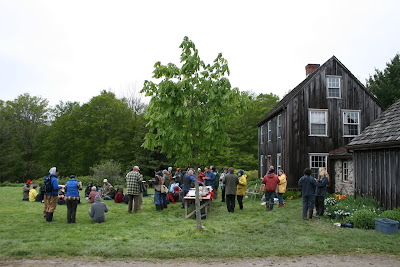
Here are the interns from many different farms at our first CRAFT day. Held once monthly, interns from all farms have an opportunity to tour another CRAFT farm, learn about a specific farming related topic through guest speakers or presentations, have a fabulous potluck lunch and pitch in a little work for that farm. With so many hands a lot can be done in little time!
Many of the farms in the C.R.A.F.T. network have CSA (Community Supported/Shared Agriculture) programs. Plan B Organic Farms, a family run farm, is one of the largest CSAs in Canada. Working there gave me insights into the operation of a very large organic farm/CSA operation. Their model is different from some farms, in that they work with many other local organic farms and distributors in order to include a wide array of vegetables and fruits to their share members, not all always grown on their farm. Share boxes were delivered to urban centres (mainly Toronto and Burlington), either to individual houses or at depots (for example one house in a neighborhood of many who purchased shares would receive them all on their porch for that area.)

Fields at this farm were large and required a lot of focused work in planting, weeding, and harvesting. Produce was also sold at a few farmers' markets in Toronto. Running these farmers' market stalls were some of my favourite experiences as talking with people and seeing their joy in the produce we grew fueled my passion for the work I was doing. I learned a lot from direct experience on this farm and asking questions of the more experienced people around me, of which there were many.
A different model is used at Ignatius Organic Farm for their CSA and intern program. Members come to the farm and pick up their shares themselves in the farm store. The farm does not do any farmers' markets. This farm is very education focused and makes a concerted effort to know what the learning objectives of interns are and how they can be achieved. It runs a structured intern program where regular field trips and work shops are organized for interns as well. A huge variety of crops are grown on this farm's acreage and I really enjoyed learning how to grow and harvest such a wide variety of vegetables.
On both CRAFT farms I interned at I found a communal approach to working, living, and learning was essential; sharing knowledge, sharing ideas, sharing food, sharing the work load. The people I met during my time this growing season are likely the most valuable thing I have taken away from the experience; truly kind and loving people with a passion for growing healthy food and creating sustainable food systems in our communities.
My interest in learning more about organic agriculture led me to doing an internship through the C.R.A.F.T. (Collaborative Regional Alliance for Farmer Training) network of organic farms in Ontario. I lived and worked on two very different farms from May through to November 2010.
If you have an interest in learning more about organic farming I strongly recommend this experience of becoming an intern. Working and living the farm life alongside like-minded folks is a rewarding experience in many ways. Many skills can be learned and honed doing a CRAFT internship. Not all farms are the same, so contact them and ask plenty of questions about what it's like to work there and what you can expect to learn. The organizational structure and goals of each farm, what they have (animals and structures e.g. greenhouses), what they grow, practices used, working conditions and hours expected to work, living arrangements, stipend, and educational component offered will be different on each farm.
Many of the farms in the C.R.A.F.T. network have CSA (Community Supported/Shared Agriculture) programs. Plan B Organic Farms, a family run farm, is one of the largest CSAs in Canada. Working there gave me insights into the operation of a very large organic farm/CSA operation. Their model is different from some farms, in that they work with many other local organic farms and distributors in order to include a wide array of vegetables and fruits to their share members, not all always grown on their farm. Share boxes were delivered to urban centres (mainly Toronto and Burlington), either to individual houses or at depots (for example one house in a neighborhood of many who purchased shares would receive them all on their porch for that area.)
Fields at this farm were large and required a lot of focused work in planting, weeding, and harvesting. Produce was also sold at a few farmers' markets in Toronto. Running these farmers' market stalls were some of my favourite experiences as talking with people and seeing their joy in the produce we grew fueled my passion for the work I was doing. I learned a lot from direct experience on this farm and asking questions of the more experienced people around me, of which there were many.
A different model is used at Ignatius Organic Farm for their CSA and intern program. Members come to the farm and pick up their shares themselves in the farm store. The farm does not do any farmers' markets. This farm is very education focused and makes a concerted effort to know what the learning objectives of interns are and how they can be achieved. It runs a structured intern program where regular field trips and work shops are organized for interns as well. A huge variety of crops are grown on this farm's acreage and I really enjoyed learning how to grow and harvest such a wide variety of vegetables.
On both CRAFT farms I interned at I found a communal approach to working, living, and learning was essential; sharing knowledge, sharing ideas, sharing food, sharing the work load. The people I met during my time this growing season are likely the most valuable thing I have taken away from the experience; truly kind and loving people with a passion for growing healthy food and creating sustainable food systems in our communities.
Wednesday, December 23, 2009
Death + Life: New Year Comes
I will admit I have been neglecting my worm bin for the past 4 months.
They (most anyway) are still alive down there.
I let the newspaper almost dry out.
I failed to feed them regularly.
I mostly just neglected them completely.
Poor worms. This just attests to their ability to survive and endure poor living conditions.
But this will all change soon.
With the new year comes an opportunity for me to take better care of my worms, since my living situation will be different. For the first time in my life I will be living alone and my worms will keep me company. Things will change. Writing this makes it so.
Other posts/projects to come:
Sprouting!
Yes, I purchased a sprouter at the Vegetarian Food Food Fair in Toronto this summer.
Check out Tony Hornick's website. He's got lots of useful information about sprouting your own seeds and the health benefits of eating them.
I will photo document the process of sprouting my own healthy seeds this January 2010.
Cheap food and Tony says they're chalk full of nutrients so eat 'em up!
They (most anyway) are still alive down there.
I let the newspaper almost dry out.
I failed to feed them regularly.
I mostly just neglected them completely.
Poor worms. This just attests to their ability to survive and endure poor living conditions.
But this will all change soon.
With the new year comes an opportunity for me to take better care of my worms, since my living situation will be different. For the first time in my life I will be living alone and my worms will keep me company. Things will change. Writing this makes it so.
Other posts/projects to come:
Sprouting!
Yes, I purchased a sprouter at the Vegetarian Food Food Fair in Toronto this summer.
Check out Tony Hornick's website. He's got lots of useful information about sprouting your own seeds and the health benefits of eating them.
I will photo document the process of sprouting my own healthy seeds this January 2010.
Cheap food and Tony says they're chalk full of nutrients so eat 'em up!
Subscribe to:
Posts (Atom)